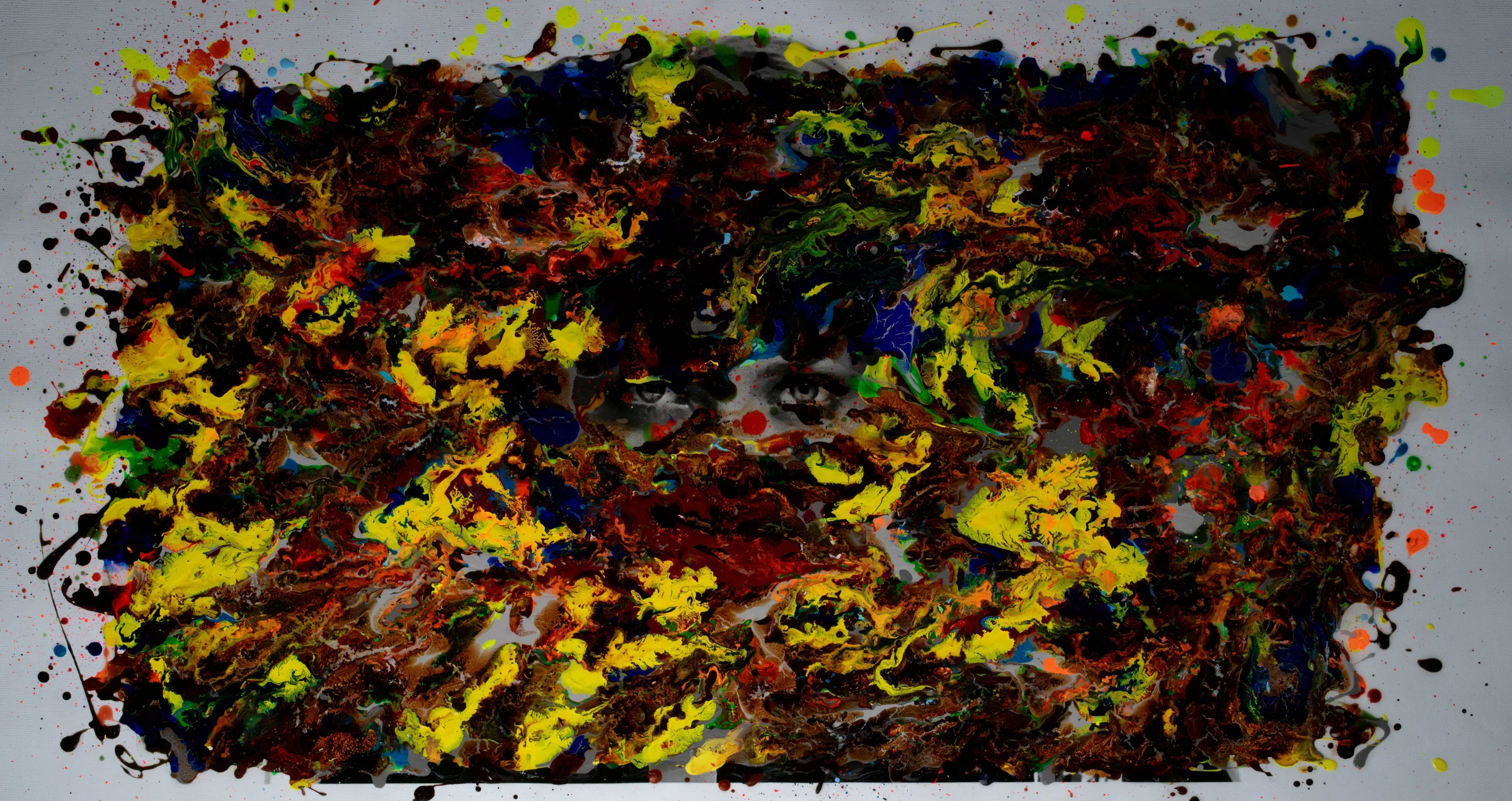
 Enter the work
Exposure
What remains when context disappears?
Selected canvases were chosen at random. The palette was restricted. Planning, narrative, and title were stripped away. Each painting was numbered only by the order in which it was made—an index of movement away from context and toward the act itself.
“Disability didn’t reduce my ability to create—it expanded it.”
After a severe neck injury, Shallit could no longer paint as he had before. New tools replaced brushes: silicone bottle brushes, corner scrubbers, and anything capable of moving paint with less pain. Materials were chosen for the time they remained workable. Limitation became method.
Exposure was completed over three months. The works were then set aside, untouched and unexamined. They are not answers, but artifacts of a search—for voice, meaning, and presence in the act of making.
In the studio
Exposure in motion
Four short films follow a portrait through successive layers of paint.
Bryan Cranston
1:10Layers of turquoise and red build across the portrait, followed by repeated marks that obscure the face.
Selected earlier work
Re-Imagined
Portraiture reconstructed through hand-painted archival pigment prints on canvas. A public chapter of the practice, presented here as the path leading toward Exposure.
Phase One
The foreground
The painted portrait, from vivid linework to the dissolving face. Selected works, 2014–17.
Phase Two
The whole scene
The background becomes part of the story. Scale, materials, and narrative expand together.
Phase Three
Toward abstraction
Process takes the lead. These examples from Exposure show the continuation of that exploration, beyond the portrait.
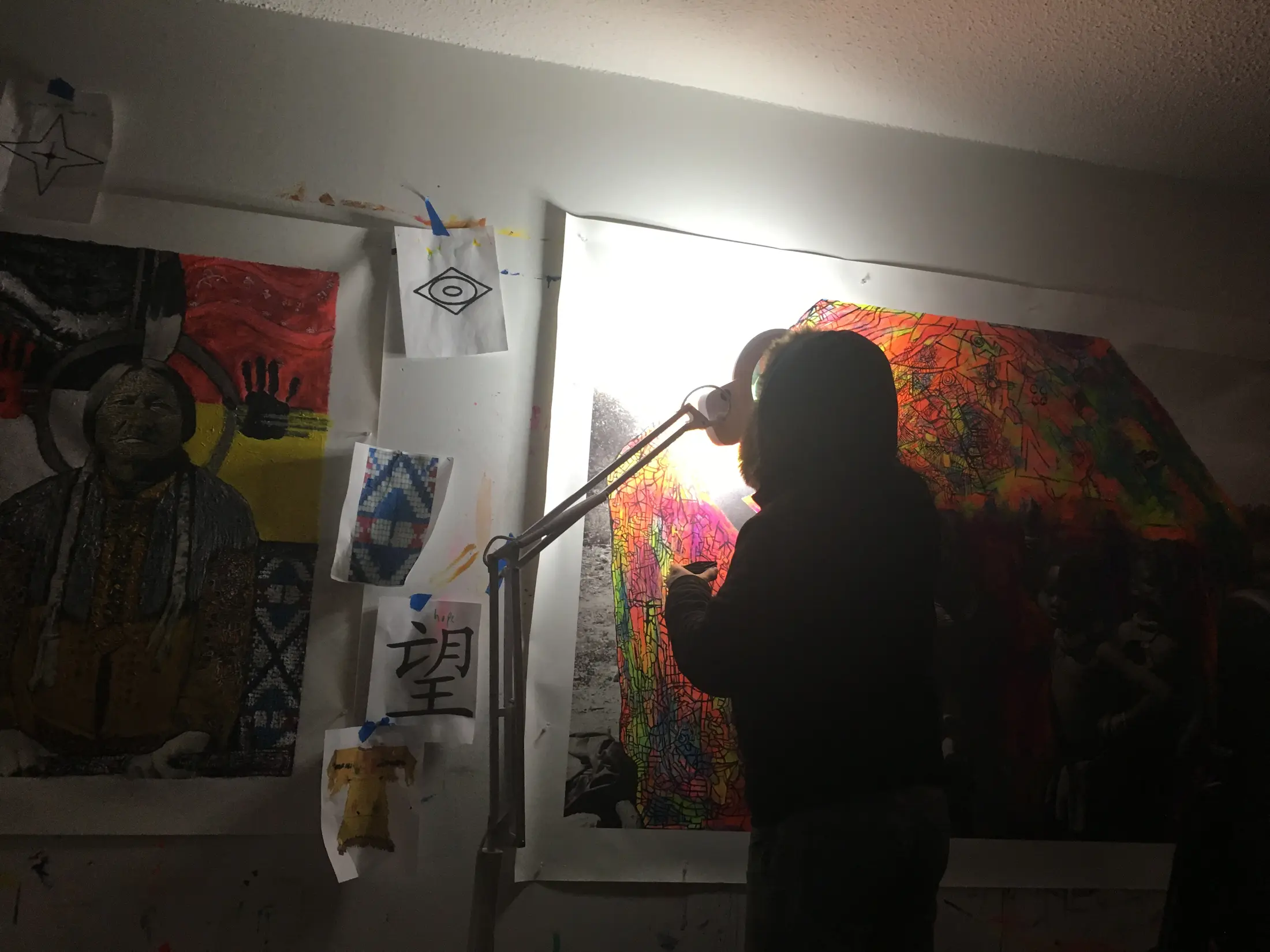
About Ariel Shallit
Art is the process between inspiration and execution.
Ariel Shallit is a New York artist whose practice centers on transformation: of images, materials, physical limitation, and the spaces of everyday life. His work moves between painting, altered archival pigment prints, and an evolving practice in adhesive vinyl.
For Shallit, the artwork is evidence of something more important—the internal act of making. His practice asks what becomes possible when control loosens, inherited context falls away, and process becomes a way home.
The current adhesive-vinyl work will enter this archive as a distinct body of work when it is ready to be shown.
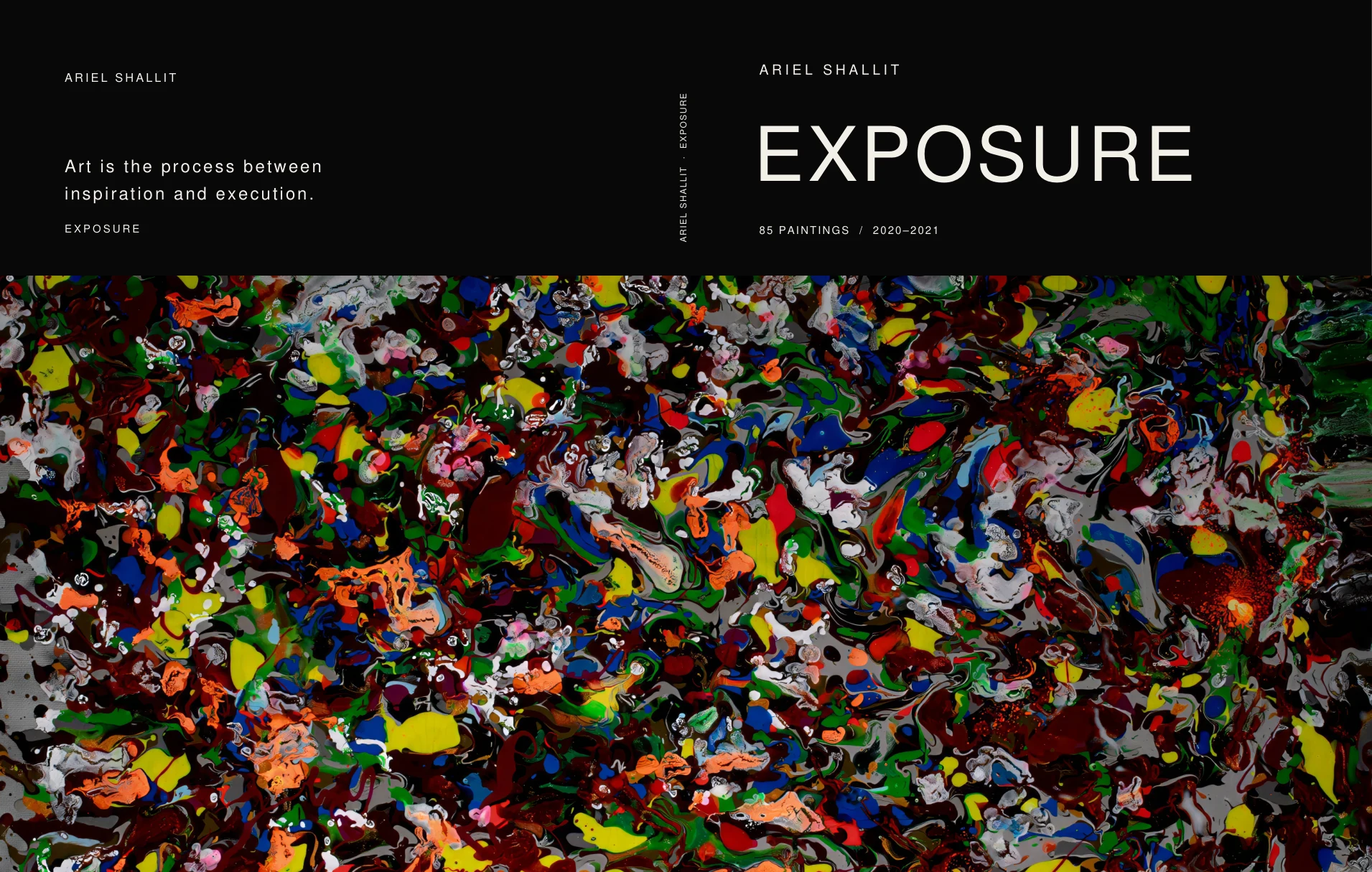
Publication
Exposure
The complete 179-page catalog: 85 paintings made during the isolation of the pandemic, with the artist’s foreword and the full sequence of the work.
Selected coverage